Introducing the Intricacies of Style and Manufacturing at a Metal Foundry
The layout and production processes at a metal foundry entail a series of elaborate steps. Each stage, from selecting raw products to melting and casting, plays an essential role in the last item. Aluminum Foundry. Precision and quality assurance are extremely important in this industry. As innovation advances, brand-new developments are arising. These developments might redefine traditional practices. What implications do these adjustments hold for the future of steel foundries?
The Melting Process: Turning Raw Products Into Liquid Metal
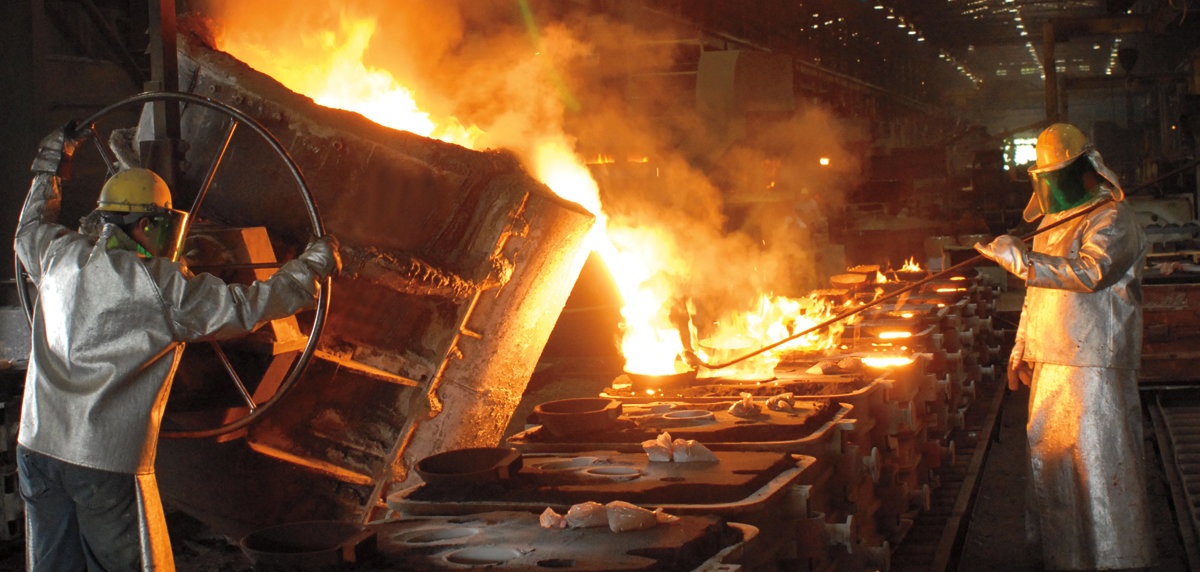
The melting process serves as the important very first step in transforming resources into fluid metal, a procedure important for foundry procedures. This stage begins with the cautious option of metals, which might consist of light weight aluminum, copper, or iron, relying on the desired end product. Each material is examined for pureness and make-up to assure ideal melting conditions.

As the steels reach their melting point, they transform from solid to fluid, permitting more refinement. This procedure can likewise consist of the elimination of pollutants via slag development, assuring the top quality of the liquid steel. Ultimately, the successful conclusion of the melting process lays the structure for succeeding metalworking procedures.
Molding Methods: Forming Metal With Accuracy
Adhering to the melting process, the following phase in metal foundry operations entails molding methods that form the liquid metal into wanted kinds. Various approaches are used, each selected based upon the specific requirements of the job. Sand casting, one of the most usual techniques, uses a combination of sand and binder to create molds that can be conveniently formed and reused. One more approach, financial investment casting, entails producing a wax pattern that is covered in a ceramic covering, enabling intricate styles and high precision.
Pass away spreading, in comparison, makes use of high-pressure to inject liquified metal into steel molds, resulting in consistent and sturdy products. In addition, the selection of molding technique affects the cooling rate, surface finish, and dimensional precision of the final item. Comprehending these methods is important for optimizing design and ensuring the successful manufacturing of steel elements tailored to particular applications.
Casting Approaches: From Model to Manufacturing
Countless spreading approaches are used in steel factories to shift from prototype growth to full-scale manufacturing. Among these approaches, sand casting attracts attention for its versatility and cost-effectiveness, making it perfect for both little and huge production runs. Financial investment casting, understood for its accuracy, is commonly made use of for complicated geometries, enabling for great information in the final product. Die casting, ideal for high-volume manufacturing, utilizes liquified steel infused into mold and mildews, offering excellent surface finish and dimensional precision.
Quality Assurance: Making Certain Quality in Every Pour
While the spreading process can vary substantially between techniques, Homepage preserving extensive high quality control is vital to establish that every pour satisfies the called for standards. Quality assurance in a metal foundry incorporates a collection of methodical checks and assessments developed to identify issues early in the manufacturing procedure. This consists of careful evaluations of basic materials, surveillance of melting temperatures, and evaluations of mold integrity.
Foundry employees utilize various screening Find Out More techniques, such as non-destructive testing and dimensional confirmation, to ascertain that castings accomplish preferred requirements. Furthermore, adherence to developed industry criteria and accreditations enhances the integrity of the last product.
Comments loopholes are likewise crucial; any disparities kept in mind during top quality evaluations are examined to refine procedures and reduce future errors. Eventually, a society of quality control promotes not only consumer fulfillment yet likewise a reputation for excellence in the competitive landscape of metal manufacturing.
Innovations and Technologies: The Future of Metal Foundries
The landscape of steel shops is quickly evolving, driven by developments in technology and innovative techniques. Automation and robotics are changing conventional operations, enhancing performance and accuracy during production. Automated putting systems and robot arms lower human mistake, leading to higher quality results. Furthermore, the integration of expert system is enabling predictive maintenance, maximizing tools efficiency, and reducing downtime.
Additive production is becoming a game-changer, enabling for rapid prototyping and the development of complicated geometries that were formerly unattainable. This innovation promotes the modification of steel components, catering to specific client needs without significant dead time.
Sustainability is additionally a crucial focus, with foundries taking on greener techniques, such as recycling scrap steel and making use of energy-efficient furnaces. These innovations not only improve productivity but additionally align with international initiatives in the direction of eco liable production, making certain the future of steel factories continues to be affordable and durable in an altering industrial landscape.
Regularly Asked Questions
What Kinds of Metals Are Typically Used in Shops?
Typical metals utilized in factories include light weight aluminum, cast iron, steel, brass, and bronze (Aluminum Casting). Each steel possesses unique properties, making them appropriate for different applications in sectors such as vehicle, aerospace, and construction, to name a few
How Do Foundries Take Care Of Waste and Environmental Effect?
Foundries take care of waste website link and environmental influence by executing reusing programs, using advanced filtering systems, and sticking to stringent governing requirements. They commonly invest in lasting modern technologies to minimize emissions and promote liable resource use throughout their operations.
What Precaution Are in Location for Employees?
Foundries implement numerous precaution for employees, consisting of personal safety tools, proper air flow systems, regular safety and security training, emergency situation reaction procedures, and stringent adherence to work-related health regulations to reduce risks connected with hazardous products and equipment.
How much time Does the Whole Manufacturing Process Commonly Take?
The entire manufacturing process generally takes numerous weeks, depending upon the intricacy of the design and the materials used. Factors such as mold preparation, melting, and cooling time considerably influence the general duration of manufacturing.
What Are the Main Tests Dealt With by Metal Foundries Today?
Metal factories today encounter challenges such as increasing material costs, varying need, ecological policies, proficient labor shortages, and keeping quality assurance. These problems complicate production efficiency and success in a progressively affordable market.
The design and manufacturing procedures at a metal foundry include a series of intricate actions. The melting procedure serves as the vital first action in transforming raw materials into fluid steel, a procedure vital for foundry operations. Complying with the melting process, the next stage in metal foundry operations entails molding techniques that shape the liquid steel into desired kinds. Numerous casting approaches are employed in steel factories to move from prototype advancement to full-scale manufacturing. Quality control in a metal foundry includes a series of systematic checks and assessments designed to determine problems early in the manufacturing process.